
ATFirst™ · Hepatitis and HIV rapid tests
ATFirst™ HBsAg Rapid Test (Hepatitis B Surface Antigen)
A lateral flow cassette for the qualitative detection of hepatitis B surface antigen (HBsAg) in human whole blood, serum or plasma. The result is read at 10 minutes.
- Professional use
- Result in 10 minutes
- Whole blood, serum or plasma
- CE marked
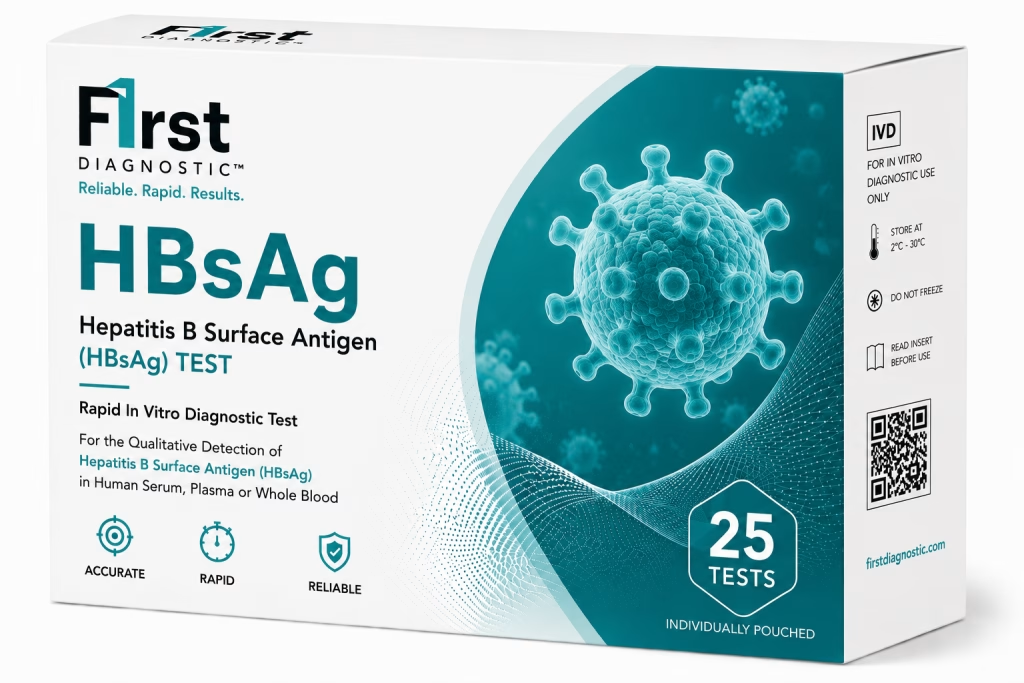
Intended use of the HBsAg rapid test
The ATFirst™ HBsAg rapid test is an immunochromatographic assay for the qualitative detection of hepatitis B surface antigen (HBsAg) in human whole blood, serum or plasma at or above a level of 1 ng/ml. It is intended for professional use as an aid in the diagnosis of hepatitis B virus (HBV) infection.
The assay provides a preliminary result only. A clinician must interpret it together with other clinical and laboratory findings.
First Diagnostic™ Corporation brands and distributes this cassette within its catalog of rapid tests. The product was formerly marketed as FirstVue™ HBsAg; a historical article covers the 2008 Walter Reed evaluation of the FirstVue™ HBsAg rapid test.
Specifications
| Brand | ATFirst™ |
|---|---|
| Catalog number | 85226400050 |
| Format | Cassette |
| Analyte / target | Hepatitis B surface antigen (HBsAg) |
| Detection level | 1 ng/ml (as printed in the insert) |
| Specimen | Whole blood, serum or plasma |
| Sample volume | Whole blood: one drop (40 µl), then 2 drops (90 µl) of assay buffer. Serum or plasma: three full drops (120 µl). |
| Time to result | Read at 10 minutes; confirm negatives at 20 minutes |
| Read window | Do not interpret results after 30 minutes |
| Kit contents | Pouched test cassette with sample dropper and desiccant; sample buffer (3 ml per bottle for 25 tests, for whole blood samples); instructions for use |
| Storage | 2–30 °C in the sealed pouch; do not freeze |
| Intended user | Healthcare professionals |
| Regulatory | CE marked (as shown on the product insert) |
| Insert document | Doc No. A02-01-222/A02-01-322, Ver. 2, revision February 25, 2014 |
How the test works
This is an antigen-capture lateral flow test. Monoclonal antibodies against HBsAg are conjugated with colloidal gold on the conjugate pad and are also immobilized on the test line of the nitrocellulose membrane.
The sample rehydrates the gold conjugate. Any HBsAg present binds to it, migrates along the membrane and is captured at the Test Zone (T), forming a visible pink line. A pink line at the Control Zone (C) is the internal process control and should always appear once the test is completed.
According to the insert, the test detects HBsAg of the major serotypes it lists (adr, adw, ayr) at concentrations of 1.0 ng/ml.
Test procedure at a glance
- Prepare the specimen. Collect blood by finger-stick or venipuncture. Use only clear, non-hemolyzed serum or plasma. Test whole blood immediately after collection; otherwise the insert allows the blood to be stored at 2 °C to 8 °C for up to three days and brought to room temperature before use.
- Open the pouch. Tear the sealed pouch at the notch, remove the testing device and place it on a level surface.
- Add the sample. Whole blood: hold the dropper vertically and add one drop (40 µl) to the Sample Well, wait 20–30 seconds, then add 2 drops (90 µl) of assay buffer to the same well. Serum or plasma: add three full drops (120 µl) of specimen.
- Read the result. Read at 10 minutes. Specimens with high concentrations of HBsAg may give a positive result in as little as 1 minute. Confirm negatives at 20 minutes and do not interpret results after 30 minutes.
This summary does not replace the instructions for use supplied with the kit.
Reading results
- Negative: a pink band appears only at the control region (C).
- Positive: a clear pink control band (C) and a detectable test band (T) appear.
- Invalid: no band is visible at the control region (C). Repeat with a new test device; if the test still fails, contact your distributor with the lot number.
The control band is an internal quality control. The insert adds that good laboratory practice recommends the daily use of an outside control.
Limitations
- The test is qualitative and gives a preliminary result. It does not measure the concentration of HBsAg.
- Humidity and temperature can adversely affect results.
- False results can occur because of interfering substances in the specimen or technical and procedural errors.
- Other clinically available tests are required when a result is questionable. A definitive clinical diagnosis should not be based on a single test; it should be made by the physician after all clinical and laboratory findings have been evaluated.
- The insert contains no clinical performance table, so no sensitivity or specificity figures are given on this page.
Downloads
The instructions for use supplied with the kit are the reference document for this test.
- ATFirst™ HBsAg rapid test – instructions for usePDF · Catalog 85226400050 · Doc No. A02-01-222/A02-01-322, Ver. 2
Frequently asked questions
How should the test be stored?
Store the test device in its sealed pouch at 2–30 °C and do not freeze it. Keep it away from direct sunlight, moisture and heat.
How many tests are in a kit?
The insert lists one 3 ml bottle of sample buffer, used with whole blood samples, per 25 tests. Confirm the current pack size on your quotation.
Is the test CE marked?
The CE mark is printed on the product insert. Regulatory status varies by country, so ask us about your market. The insert is listed with our other product inserts and instructions for use.
How do distributors order?
Complete the distributor application or email sales@firstdiagnostic.com with catalog number 85226400050 and the quantity you need.
Related rapid tests
- Hepatitis and HIV rapid tests — The full category of hepatitis and HIV tests.
- ATFirst™ HIV / HBsAg / HCV combo rapid test — HIV 1/2 antibodies, HBsAg and HCV antibodies on one cassette with three test lines.
- ATFirst™ HBV 5-parameter combo rapid test — A five-marker hepatitis B panel for serum or plasma; confirm the markers in the insert.
- Lateral flow tests explained — How lateral flow tests work and where they are used.
Request a quote for the ATFirst™ HBsAg test
Tell us your market, the catalog number and your expected volumes. First Diagnostic supplies professional buyers outside the United States.
Source: ATFirst™ Hepatitis B Surface Antigen (HBsAg) Test, Instructions For Use, catalog number 85226400050, Doc No. A02-01-222/A02-01-322, Ver. 2, revision February 25, 2014 · Last reviewed: October 2026 · First Diagnostic™ editorial team
Regulatory status: Products shown on this website are for professional in vitro diagnostic use. They are not cleared, approved or authorized by the U.S. Food and Drug Administration and are not offered for sale in the United States. Product availability and regulatory status vary by country; contact us for the status in your market.