
Resource center · Early cancer diagnostics
Liquid biopsy explained: what blood-based tumor testing can show
A liquid biopsy looks for tumor material in blood or another body fluid instead of in tissue. This guide explains what is measured, how the results are used and where the limits are.
- Educational guide
- Reviewed October 2026
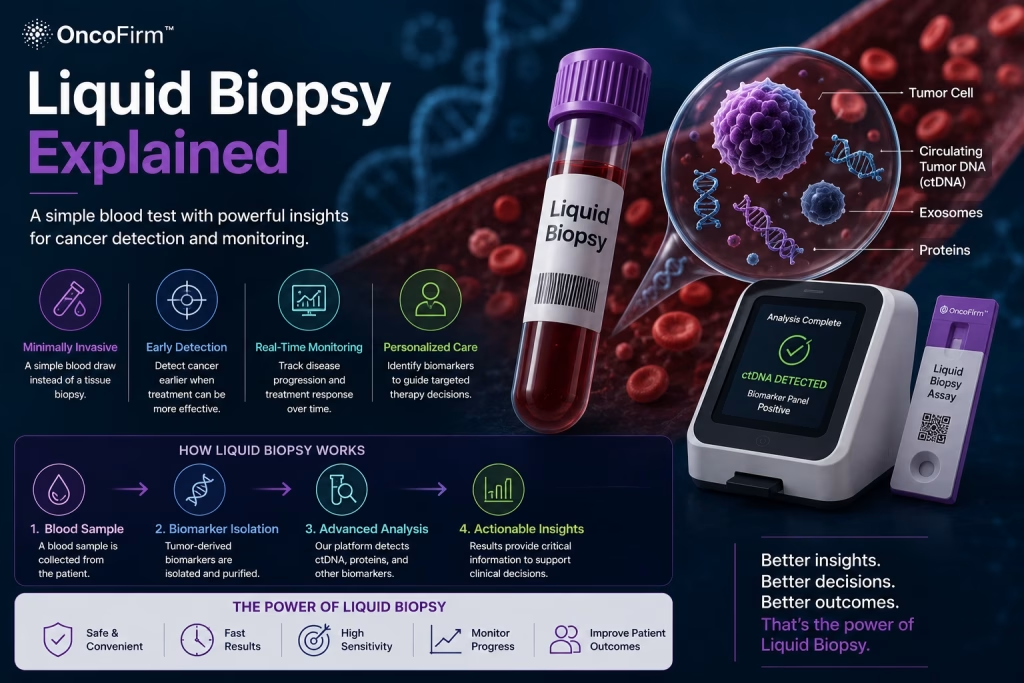
What a liquid biopsy is
A liquid biopsy is a laboratory test that analyzes tumor material found in a body fluid, most often blood. The U.S. National Cancer Institute (NCI) describes the approach as analyzing bits of tumor material, molecules as well as whole cells, found in fluids such as blood or urine.
The interest is practical. The NCI notes that tissue biopsies can be invasive, risky, costly and painful, that some patients cannot have one because the tumor is inaccessible or because of other health conditions, and that repeated tissue biopsies are difficult. A blood draw can be repeated.
What a liquid biopsy measures
Circulating tumor DNA
Tumors release fragments of DNA into the bloodstream. This circulating tumor DNA (ctDNA) is one part of the cell-free DNA in plasma, which also comes from normal cells. Laboratories look for tumor-specific features in it: mutations, methylation patterns or fragmentation patterns.
Circulating tumor cells and other analytes
Whole tumor cells that have entered the blood can be isolated and analyzed. RNA and extracellular vesicles are also studied.
Protein tumor markers
Proteins such as PSA, CEA and AFP are circulating tumor markers too, and have been measured by immunoassay for decades. In everyday use, however, the term liquid biopsy usually refers to the DNA- and cell-based methods above. See what are cancer biomarkers and tumor antigen detection.
The main analytical methods are PCR-based assays for known mutations and high-throughput sequencing for broader panels. Both need a specialized laboratory and bioinformatic interpretation.
How liquid biopsy results are used
- Selecting treatment. The most established use is finding tumor mutations that guide targeted therapy in a person already diagnosed with cancer. The NCI notes that a liquid biopsy may be used when a tumor biopsy cannot be obtained safely, and that liquid biopsy tests have been approved in the United States for this purpose.
- Monitoring. According to the NCI, ctDNA tests may be useful for following response during and after treatment, and in studies ctDNA patterns signaled a returning cancer in some patients before it could be seen on a CT scan.
- Detecting cancer in people without symptoms. This is a research use. Multi-cancer detection tests are being evaluated in trials; see the future of cancer screening.
Limits of liquid biopsy
- Early-stage disease. The NCI states that multi-cancer detection tests are better at detecting later-stage cancers than earlier-stage ones. A negative result does not exclude cancer.
- False positives. The NCI reports that liquid biopsy tests have sometimes detected cancer-associated DNA when no cancer developed. A positive result needs imaging and, usually, tissue confirmation.
- Representativeness. Tumors are heterogeneous, and it is not known whether ctDNA is released by the whole tumor or only by parts of it, so a blood result may not reflect the full tumor.
- No histology. A blood test cannot show tissue architecture or tumor type as a pathologist sees it. Tissue remains the basis of diagnosis.
- Outcome evidence. In its overview of the field, the NCI called whether liquid biopsy tests improve patient survival possibly the biggest unanswered question.
Liquid biopsy and tissue biopsy compared
The two methods give complementary information
| Feature | Liquid biopsy | Tissue biopsy |
|---|---|---|
| Specimen | Blood or another body fluid | Tumor tissue taken by needle, endoscope or surgery |
| Repeat sampling | Practical, by blood draw | Difficult to repeat |
| Information | Molecular changes in circulating tumor material | Histology and molecular changes |
| Role | Complement in selected situations | Basis of cancer diagnosis |
| Main limit | Little tumor material in blood, especially in early disease | Invasive; samples one site |
General comparison; the role of each method depends on the cancer type and the clinical question.
Liquid biopsy is not a rapid test
Liquid biopsy and lateral flow tests are sometimes mentioned together because both can use blood. They are different technologies. A lateral flow immunoassay detects a protein present at a relatively high concentration and gives a visual result in minutes. ctDNA analysis looks for rare DNA fragments and needs extraction, amplification or sequencing, and data analysis in a laboratory. There is no rapid cassette equivalent of a ctDNA test. Developments in protein-marker testing are covered in rapid diagnostic technologies: what is changing.
Where First Diagnostic fits
First Diagnostic™ Corporation distributes rapid tests for professional in vitro diagnostic use; it does not supply liquid biopsy assays. Its range includes qualitative PSA, CEA and AFP tests, listed with the tumor-marker and general health rapid tests, which are aids used alongside other clinical and laboratory findings and are not cancer screening or diagnostic tools. The company’s interest in rapid cancer-marker testing and digital cassette readers is a longer-term goal, and nothing in this area is available yet. For questions about the current catalog, contact First Diagnostic.
Frequently asked questions
Does a liquid biopsy replace a tissue biopsy?
No. Tissue examination remains the basis of cancer diagnosis. A liquid biopsy adds molecular information in selected situations, for example when tissue cannot be obtained safely.
Can a liquid biopsy detect cancer early?
This is being studied. According to the NCI, blood-based multi-cancer detection tests are better at finding later-stage cancers than early-stage ones, and no definitive trial has shown that screening with them reduces cancer deaths.
Is a PSA or CEA blood test a liquid biopsy?
These are circulating protein tumor markers measured by immunoassay. The term liquid biopsy is normally used for analysis of circulating tumor DNA or tumor cells.
Can a liquid biopsy be done at the point of care?
No. ctDNA analysis requires a specialized molecular laboratory.
Keep reading
- Lateral flow tests explained — The pillar guide to how lateral flow rapid tests are built, read and evaluated.
- What are cancer biomarkers? — Types of biomarker, what they are used for and why few are suitable for screening.
- Tumor antigen detection — How immunoassays measure tumor-associated proteins such as PSA, CEA and AFP.
- The future of cancer screening — Established screening methods and the approaches still being evaluated in trials.
- Point-of-care oncology — What near-patient cancer-marker testing can and cannot show.
References
- National Cancer Institute. Liquid Biopsy: Using DNA in Blood to Detect, Track, and Treat Cancer. Cancer Currents, November 8, 2017. cancer.gov
- National Cancer Institute. Biomarker Testing for Cancer Treatment. cancer.gov
- National Cancer Institute. Tumor Markers (fact sheet). cancer.gov
- National Cancer Institute. Screening for Many Cancers with One Test: Uncertainty Abounds. Cancer Currents, April 21, 2022. cancer.gov
- National Cancer Institute, Division of Cancer Prevention. Questions and Answers about Multi-Cancer Detection Tests. prevention.cancer.gov
Source: First Diagnostic™ editorial team; sources listed above · Last reviewed: October 2026 · First Diagnostic™ editorial team
Regulatory status: Products shown on this website are for professional in vitro diagnostic use. They are not cleared, approved or authorized by the U.S. Food and Drug Administration and are not offered for sale in the United States. Product availability and regulatory status vary by country; contact us for the status in your market.