
Resource center
Lateral flow cassette reader guide: digital reading of rapid tests
A lateral flow cassette reader images the result window of a rapid test and reports the lines it finds. This guide explains what readers do, where they help and where they do not.
- Guide
- Development goal, not a product
- Reviewed October 2026
What a lateral flow cassette reader does
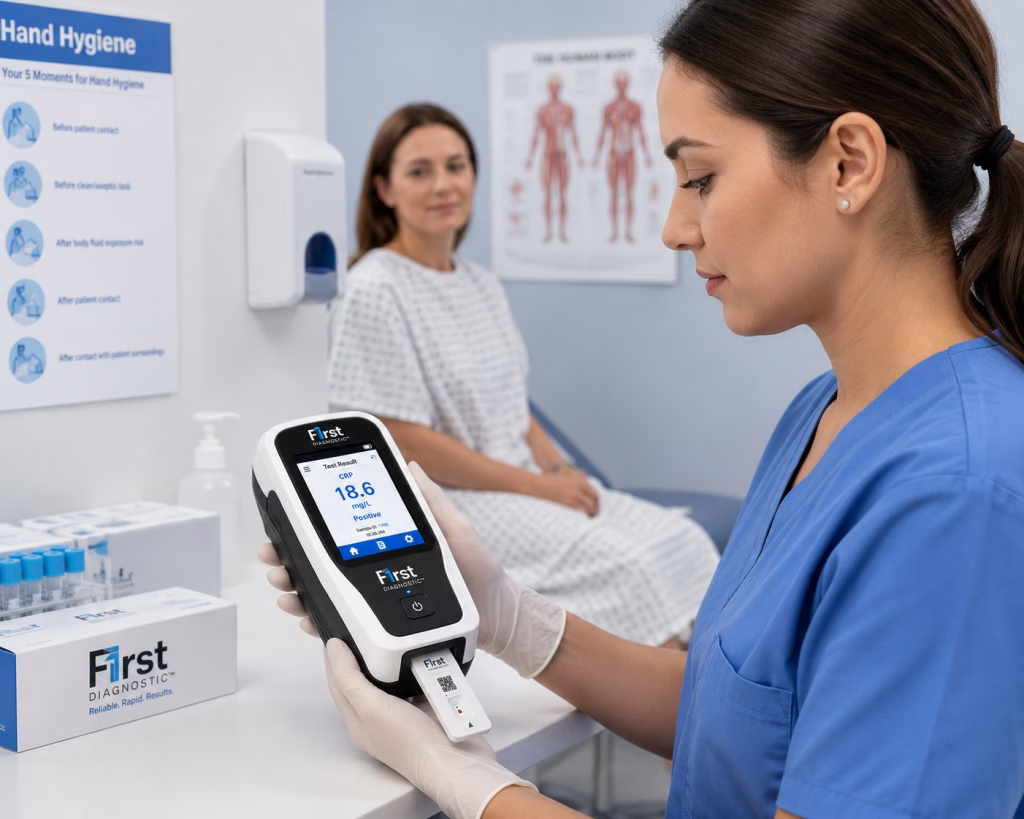
A lateral flow cassette reader is an instrument, or a camera-based application with a holder, that reads the result window of a rapid test cassette in place of the human eye. The test itself runs as usual; our guide to lateral flow tests describes the strip.
Reading follows four steps:
- Image capture. The cassette sits in a fixed position, and the reader photographs or scans the window under controlled lighting.
- Line location. Software finds the control line and the expected position of each test line.
- Measurement. Line intensity is measured against the background and compared with a threshold set for that specific test. If the control line is missing, the run is reported as invalid.
- Output. The reader displays the result and stores it with the date, time, operator and lot details entered or scanned.
Where digital reading helps
- Objective reading. The same threshold is applied every time, which removes differences between operators when a line is faint.
- Records. Each result is stored with an image or a numeric value, so it can be reviewed later.
- Connectivity. Results can be exported to a laboratory information system or a program database without manual transcription.
- Timing. Some readers time the incubation and read at the specified moment.
Readers are also required for assays that the eye cannot read, such as tests with fluorescent labels. The comparison of fluorescent and gold nanoparticle labels covers that distinction.
Limits of cassette readers
A reader does not change the chemistry on the strip. A visually read test keeps the performance stated in its insert, and reading it with an instrument that was not validated for it creates an unverified method.
- Reader and test must be validated together: cassette geometry, line positions, label type and thresholds are product specific.
- Errors made before reading remain: wrong specimen volume, expired kits, or reading outside the stated time window.
- A reader adds purchase cost, charging or power needs, cleaning, calibration checks and software maintenance.
- Software that interprets a diagnostic result is generally regulated as an in vitro diagnostic device in its own right, with its own regulatory status in each market.
For low test volumes, a trained operator, a timer and a written record remain a workable method. See point-of-care testing for the quality practices involved.
A First Diagnostic™ reader: a development goal, not a product
First Diagnostic™ Corporation brands and distributes lateral flow rapid tests made by established IVD manufacturers. A First Diagnostic™ cassette reader with software-assisted line interpretation is a development goal. It is not a product you can order.
We do not publish specifications, performance data or dates for it. ATFirst™ and inSTIcheck™ tests in the rapid tests catalog are read visually, as their inserts describe.
Reader manufacturers who want sales representation can review our services for distributors and manufacturers. For questions about reading a specific test, contact us.
Frequently asked questions
Can I order a First Diagnostic cassette reader?
No. A reader with software-assisted line interpretation is a development goal. There is no product, specification or launch date.
Will any reader work with any cassette?
No. A reader must be validated for the specific test: cassette shape, line positions, label and thresholds. Using an unvalidated combination is outside the test’s instructions for use.
Does a reader make a rapid test quantitative?
Only if the assay was designed and calibrated for quantitative reading with that reader. A qualitative test read by an instrument remains a qualitative test.
Keep reading
- Lateral flow tests explained — How the strip produces test and control lines.
- Fluorescent vs gold nanoparticle labels — Why some assays need an instrument.
- Rapid diagnostic technologies: what is changing — Trends in readers, labels and multiplex formats.
- Point-of-care testing: where rapid tests fit — Settings and quality practices.
Source: First Diagnostic™ editorial team · Last reviewed: October 2026 · First Diagnostic™ editorial team
Regulatory status: Products shown on this website are for professional in vitro diagnostic use. They are not cleared, approved or authorized by the U.S. Food and Drug Administration and are not offered for sale in the United States. Product availability and regulatory status vary by country; contact us for the status in your market.