
Resource center · Early cancer diagnostics
Why early cancer detection matters, and where its limits are
Early cancer detection covers two different activities: prompt diagnosis of people with symptoms, and screening of people without them. Both can reduce harm from cancer, but only where the evidence supports them.
- Educational guide
- Reviewed October 2026
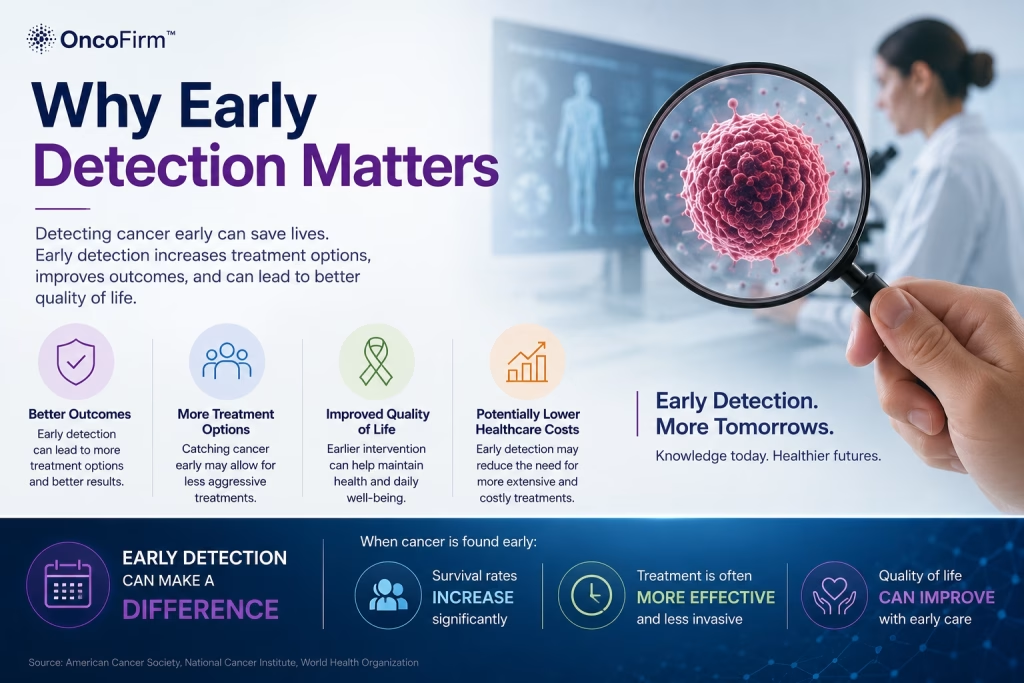
What early cancer detection covers
Early cancer detection is two activities, not one. The World Health Organization (WHO) separates early diagnosis, which concerns people who already have symptoms, from screening, which tests people who have none. The two need different services, carry different risks and rest on different evidence.
WHO describes early diagnosis as three linked steps: awareness of symptoms and of the need to seek medical advice, access to clinical evaluation and diagnostic services, and timely referral for treatment. It considers early diagnosis of symptomatic cancer relevant in all settings and for the majority of cancers.
Early diagnosis and screening compared
How WHO distinguishes the two components of early detection.
| Early diagnosis | Screening | |
|---|---|---|
| Who is tested | People with symptoms or abnormal findings | People without symptoms, selected by age and risk factors |
| Aim | Shorten the time from first symptoms to diagnosis and treatment | Find cancer or pre-cancer before symptoms develop |
| Where it applies | All settings and the majority of cancers | Some cancer types, not all |
| What it needs | Symptom awareness, accessible diagnostic services, timely referral | Special equipment, dedicated personnel and follow-up tests for abnormal findings |
| Quality assurance | Required | Required |
Source: World Health Organization, Cancer fact sheet.
Why stage at diagnosis matters
Cancer is a leading cause of death worldwide, according to WHO. When cancer is identified early, WHO states, it is more likely to respond to treatment, with a greater probability of survival, less morbidity and less expensive treatment.
The opposite pattern is common where services are limited. WHO’s Guide to cancer early diagnosis notes that in resource-poor settings cancer is often diagnosed at a late stage, resulting in lower survival, potentially greater morbidity and higher treatment costs. Reducing delays in, and barriers to, diagnosis and treatment is therefore a core aim of cancer programs.
Where screening has evidence behind it
WHO states that screening programs are effective for some but not all cancer types, and that they are far more complex and resource-intensive than early diagnosis. The examples it gives are HPV testing for cervical cancer, and mammography for breast cancer in women aged 50–69 in settings with strong or relatively strong health systems.
The measure of a screening method is whether fewer people die of the disease, not whether more cancers are found. The U.S. National Cancer Institute (NCI) describes the highest level of evidence as a reduction in mortality shown in a randomized controlled trial. Some plausible tests have not met that standard. NCI’s evidence summary on ovarian cancer concludes that screening with the blood marker CA-125 and transvaginal ultrasound does not reduce deaths from the disease.
Limits and harms of looking earlier
Finding a cancer earlier does not guarantee a better outcome. NCI describes the main ways in which screening can mislead or cause harm:
- Overdiagnosis: detecting cancers that would never have become clinically apparent without screening. Treating them brings side effects without benefit.
- Lead-time bias: survival looks longer only because the diagnosis was made sooner, even when death is not delayed.
- False-positive results: an abnormal result with no cancer present, which can cause anxiety and lead to invasive follow-up procedures.
- False-negative results: a normal result even though cancer is present.
Tumor biology matters as well. NCI points out that a high-grade cancer may grow and spread quickly whatever its stage at diagnosis, so finding it while small may not improve the outcome. Prostate cancer shows the opposite problem. NCI notes that, as more was learned about the benefits and harms of PSA screening, medical organizations began to caution against its routine use.
Where biomarkers and rapid tests fit
Blood-based cancer biomarkers are attractive because sampling is simple, but NCI states that circulating tumor markers have generally not worked well for screening. They are not sensitive enough to find everyone with the disease, and they can suggest cancer in people who do not have it. Blood tests that combine many markers are being studied, and NCI notes that questions about their clinical usefulness remain; see the future of cancer screening and liquid biopsy explained.
Access to diagnostic services is a separate question, and it is the second of WHO’s three steps. Point-of-care testing with lateral flow tests can bring some results closer to the patient. A qualitative tumor-marker result, however, neither establishes nor excludes cancer. It is one finding for the clinician to weigh when deciding on referral for imaging or pathology.
What this means for programs and laboratories
For health programs, the practical steps follow from the WHO framework: make symptoms known, keep diagnostic services within reach, and shorten the path from an abnormal finding to treatment. Even where screening exists, WHO notes that early diagnosis services are still needed for people outside the screened age or risk groups.
For laboratories and clinics, the task is to use each test within its intended use, report it with its limitations, and make sure that an abnormal result leads to confirmatory investigation.
Where First Diagnostic fits
First Diagnostic™ Corporation distributes professional-use rapid tests, among them qualitative PSA, CEA and AFP tests in its tumor-marker and general health range. These are aids used alongside other clinical and laboratory findings, not cancer screening or diagnostic tools. Rapid cancer-marker testing is a longer-term interest for the company, with nothing further available yet. To discuss supply or documentation, contact the sales team.
Frequently asked questions
What is the difference between early diagnosis and screening?
Early diagnosis means recognizing and investigating symptoms promptly so that treatment starts without delay. Screening means testing people without symptoms to find cancer or pre-cancer. WHO treats them as two separate components of early detection.
Does finding cancer earlier always improve the outcome?
No. Some cancers found by screening would never have caused symptoms, and some aggressive cancers spread quickly whatever their stage at diagnosis. This is why screening methods are judged by whether they reduce deaths in randomized trials.
What is overdiagnosis?
Overdiagnosis is the detection, through screening, of a cancer that would never have become clinically apparent in the person’s lifetime. It can lead to treatment that carries risks without offering benefit.
Can a blood tumor-marker test be used to screen for cancer?
In general, no. NCI states that circulating tumor markers have not worked well for screening because they are neither sensitive nor specific enough. They are used mainly alongside other tests to support diagnosis and to monitor treatment and recurrence.
Keep reading
- What are cancer biomarkers? — Definitions, types by clinical purpose and what a marker result can show.
- The future of cancer screening — Approaches under study and the evidence they still need.
- Liquid biopsy explained — Measuring tumor-derived material in blood.
- Point-of-care oncology — What near-patient testing can and cannot contribute in cancer care.
- Lateral flow tests explained — The pillar guide: what lateral flow tests are, where they are used and how to choose them.
References
- World Health Organization. Cancer (fact sheet). Accessed October 2026. who.int
- World Health Organization. Guide to cancer early diagnosis. Geneva: WHO; 2017. ISBN 978-92-4-151194-0. who.int
- National Cancer Institute. Cancer Screening Overview (PDQ®)–Health Professional Version. Updated October 16, 2023. cancer.gov
- National Cancer Institute. Cancer Screening Overview (PDQ®)–Patient Version. Updated October 20, 2023. cancer.gov
- National Cancer Institute. Tumor Markers. Reviewed December 7, 2023. cancer.gov
- National Cancer Institute. Ovarian, Fallopian Tube, and Primary Peritoneal Cancers Screening (PDQ®)–Health Professional Version. Updated April 9, 2025. cancer.gov
- National Cancer Institute. Prostate-Specific Antigen (PSA) Test. Reviewed January 31, 2025. cancer.gov
Source: First Diagnostic™ editorial team; sources listed above · Last reviewed: October 2026 · First Diagnostic™ editorial team
Regulatory status: Products shown on this website are for professional in vitro diagnostic use. They are not cleared, approved or authorized by the U.S. Food and Drug Administration and are not offered for sale in the United States. Product availability and regulatory status vary by country; contact us for the status in your market.