The future of cancer screening: established methods and methods on trial
Multi-cancer blood tests, risk-based screening and AI reading support: what screening programmes use today and what is still being evaluated in trials.
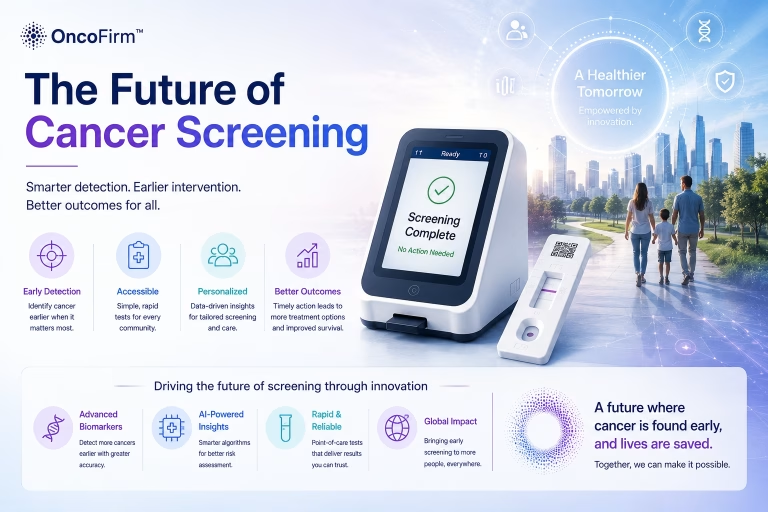
Multi-cancer blood tests, risk-based screening and AI reading support: what screening programmes use today and what is still being evaluated in trials.
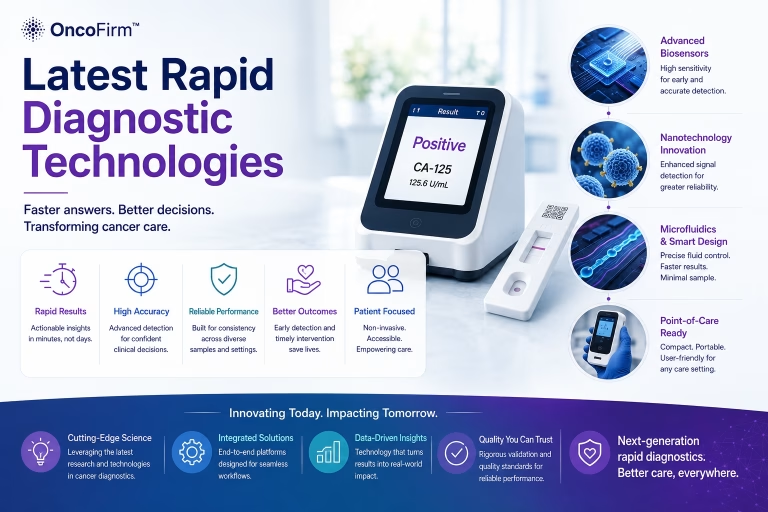
Five directions in rapid testing, from fluorescent readers and multiplex strips to isothermal and CRISPR-based detection, with what each adds and requires.
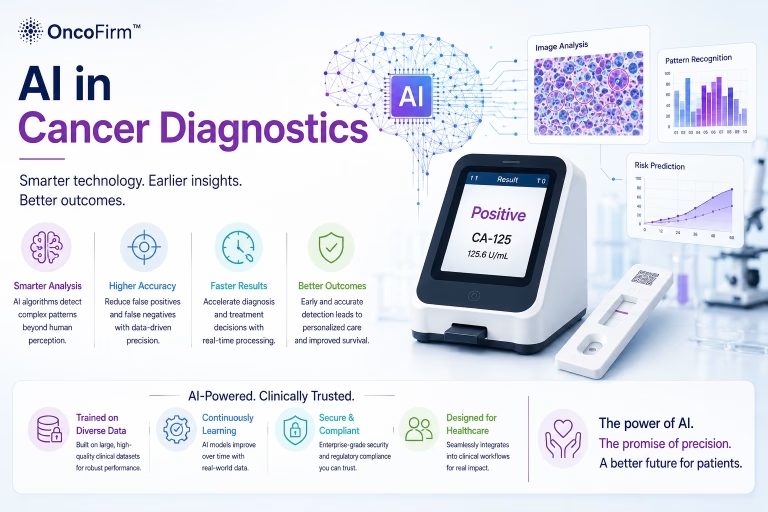
Where AI software assists cancer imaging, pathology and rapid test reading, how regulators review it, and the limits users should know.
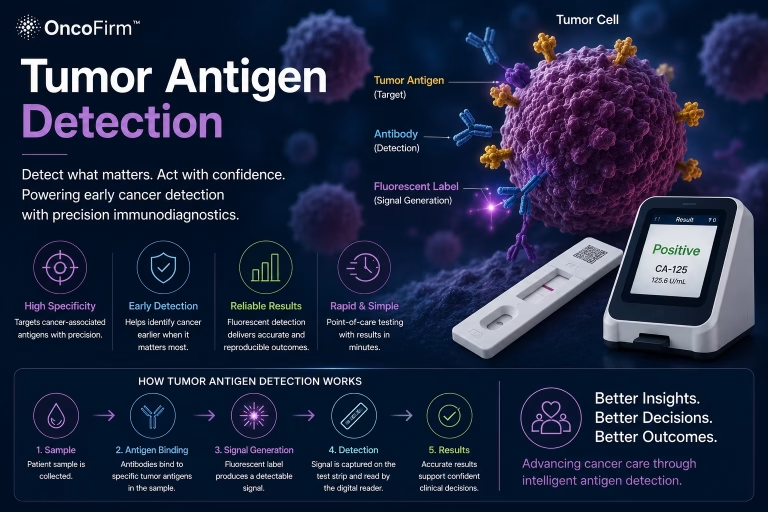
What tumor antigens are, how immunoassays measure them in blood and tissue, and why an antigen result supports clinical assessment without replacing it.
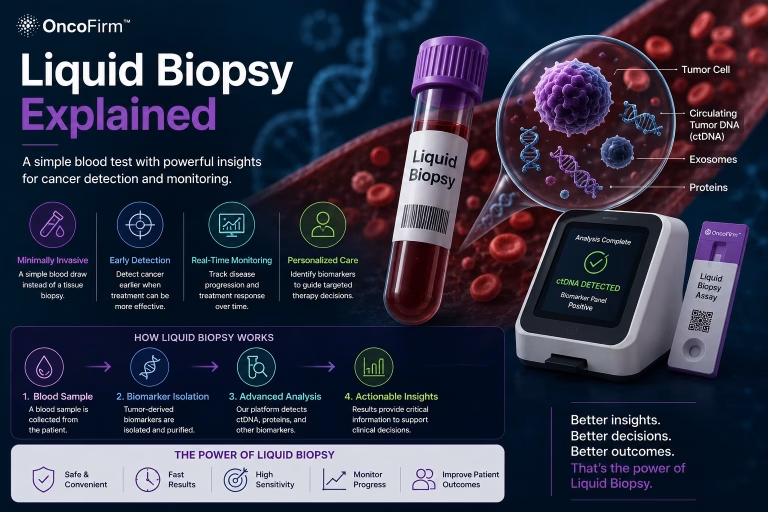
What a liquid biopsy measures, how circulating tumor DNA results are used in cancer care, and why the method has limits in early-stage disease.
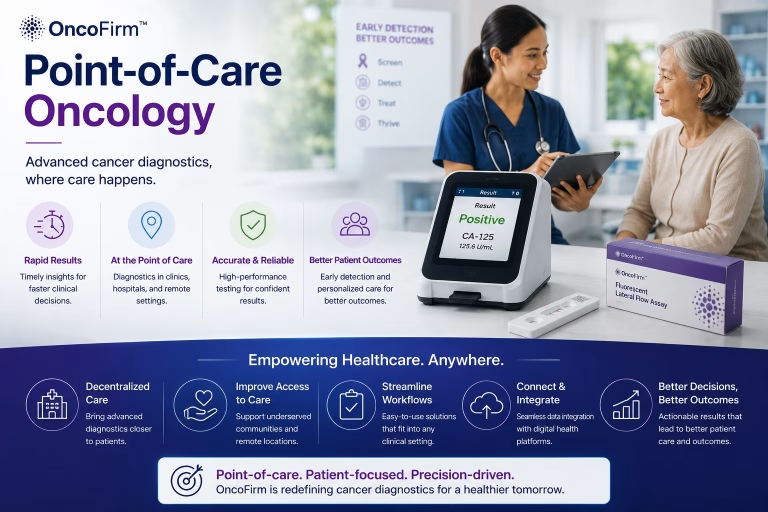
What point-of-care oncology means, which near-patient tumor-marker tests exist, and why their results need laboratory and clinical confirmation.
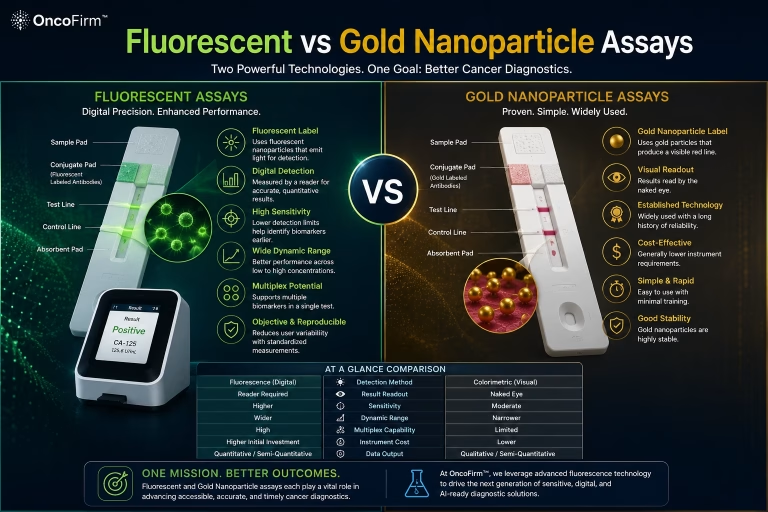
Colloidal gold gives a line read by eye; fluorescent labels need a reader. This guide compares the two for sensitivity, quantitation, equipment and workflow.
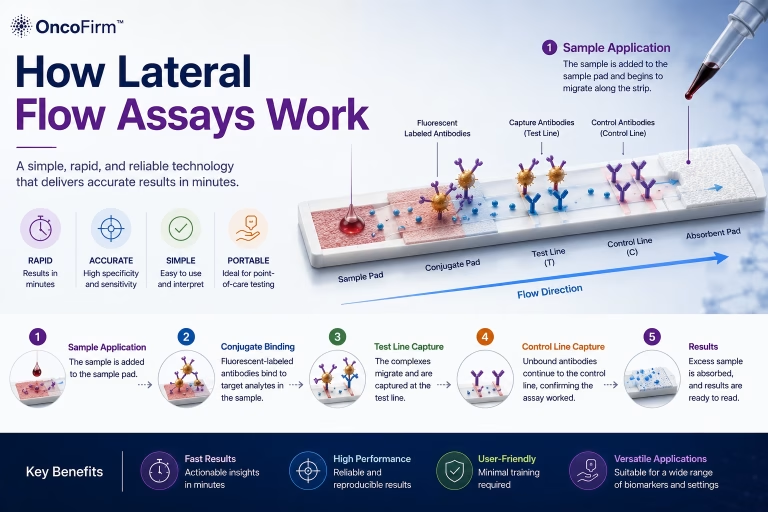
A technical guide to the lateral flow strip: what each component does, how sandwich and competitive formats produce a line, and what limits a correct reading.
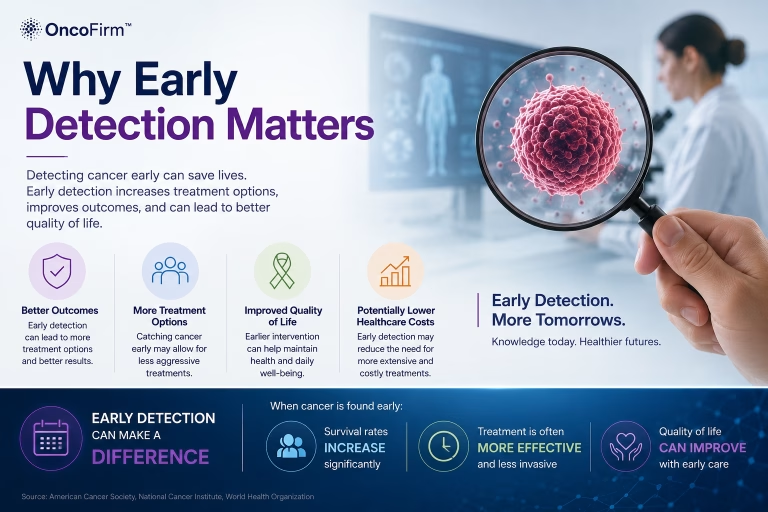
Early diagnosis and screening are different activities with different evidence. This guide sets out the benefits, the limits and where biomarker tests fit.