Lateral Flow Assay Technology | Rapid Diagnostic Device Experts
Understanding Lateral Flow Assay Technology: The Foundation of Modern Rapid Diagnostics
Introduction
Lateral Flow Assays (LFAs) are among the most widely adopted diagnostic technologies worldwide. Their combination of simplicity, portability, affordability, and rapid results has made them a cornerstone of modern point-of-care testing.
What Is a Lateral Flow Assay?
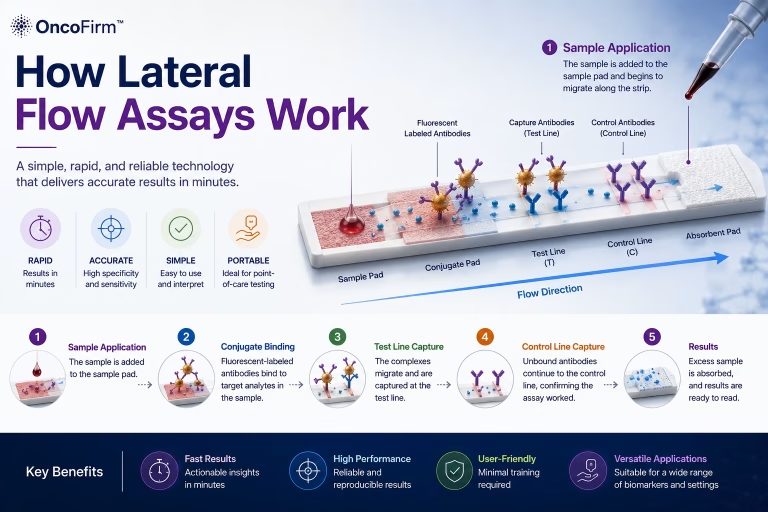
A lateral flow assay is a paper-based diagnostic platform designed to detect specific biological targets.
A typical lateral flow device contains:
- Sample pad
- Conjugate pad
- Membrane
- Test line
- Control line
- Absorbent pad
Types of Lateral Flow Detection
Antigen Detection Tests
Identify proteins from pathogens.
Examples:
- COVID-19 antigen tests
- Influenza antigen tests
- RSV antigen tests
- Hepatitis antigen tests
Antibody Detection Tests
Detect immune responses.
Examples:
- HIV antibody tests
- HSV antibody tests
- Rubella IgG/IgM tests
- CMV antibody tests
Advantages of Lateral Flow Technology
Rapid Results
Many assays provide results within 10–20 minutes.
Easy Deployment
Minimal equipment requirements allow testing outside laboratories.
Cost Effective
Manufacturing scalability makes LFAs suitable for global healthcare applications.
Flexible Design
Modern LFAs can detect multiple biomarkers simultaneously.
Next Generation Lateral Flow Diagnostics
Emerging innovations include:
- Fluorescent nanoparticles
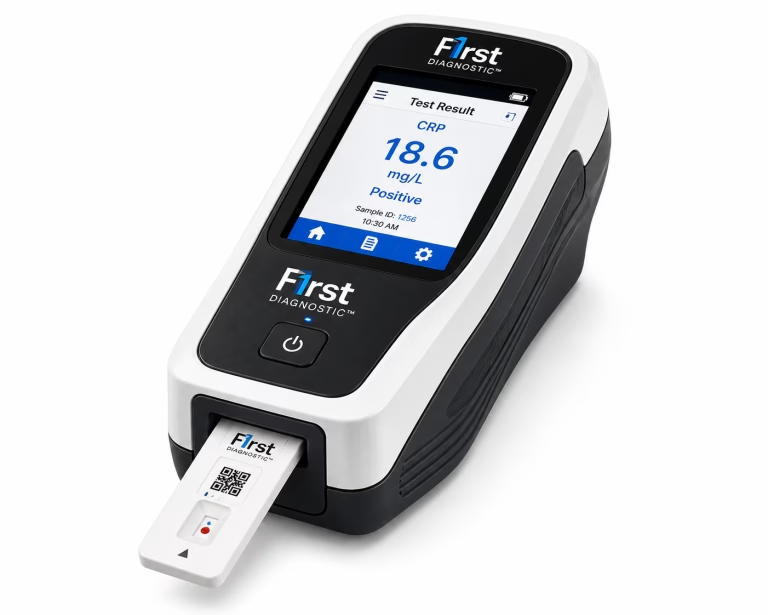
- Digital readers
- Quantitative measurement
- Multiplex testing
- Automated interpretation
These technologies are increasing analytical sensitivity and expanding clinical applications.